Dementia and Personal Care
Couple reunited at home
Imagine scenario 1
'M' is a 92-year-old lady who had been in and out of residential care and hospital following sudden memory loss, misdiagnosed as the onset of dementia. It later emerged that her memory loss was most likely caused by a sustained urine infection and poor hygienic conditions.
Her husband, as her main carer, found it increasingly difficult as M became uncooperative and distressed, leaving him frail, unhappy and distraught at being repeatedly separated from his wife and family.
As M had a further history of multiple falls linked to poor nutrition, the local Health and Rehabilitation Team approached Chieza Home Care as a care provider.
The support solution
After an initial assessment, it became evident that part of M’s distress stemmed from not wanting her husband involved in personal care, which she found intrusive. It also became clear that M needed only a slight adjustment to her daily routine.
The package that Chieza put in place consisted of two calls daily: a morning call for personal care and grooming, and an evening call to settle M for bed. These calls greatly improved her eating and drinking routine and her overall hygienic conditions.
Outcome
Eighteen months on, husband and wife are settled and thriving together, enjoying 64 years of marriage. That Christmas was the first they had spent as a complete family in four years. M has not required a single hospital admission since.
Respite and Continuity of Care
Holiday that restored confidence
Imagine scenario 2
One of the people that Chieza supports needed to temporarily relocate to the seaside while essential home adaptations were being carried out. What could have been a stressful and unsettling time turned instead into a period of comfort, enjoyment and renewal.
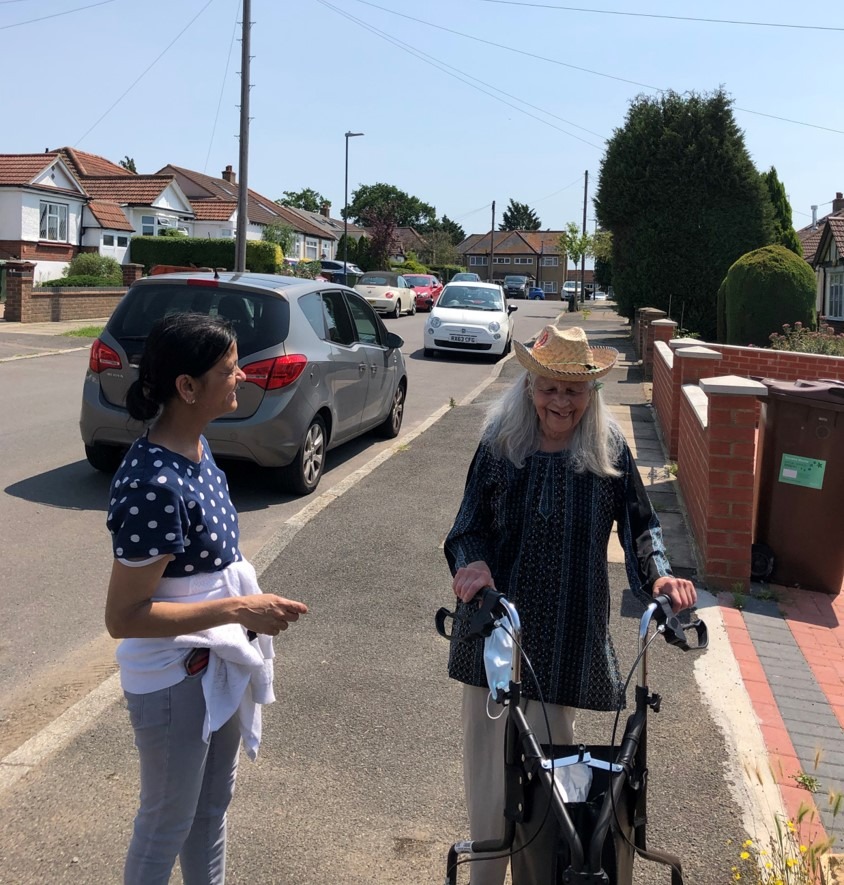
She stayed in a coastal apartment for twelve days, supported throughout by her carers. Each morning began with gentle assistance to start the day, followed by simple routines that gave structure and reassurance. Meals were shared in a relaxed way, often with tea, toast and light conversation, and there was always time for her to move around safely using her mobility aids.
Beyond the daily routines, there were many moments of real joy: daily outings to the beach, watching waves, feeding birds, sharing ice creams, visits to coffee shops, and fish and chips that quickly became a favourite. These simple experiences gave her the chance to reconnect with the outside world and find pleasure in everyday life.
On her final day she asked to visit a nearby cathedral, a deeply meaningful experience that reflected the values and faith central to her life. She described it as the highlight of her trip.
Outcome
What began as a practical arrangement to cover building works became something far more significant - a holiday that restored confidence, lifted her mood, and reminded her family of the joy she could still find in shared experiences.